Leave Your Message

2026 Best Fuse Cut Out Manufacturers for Global Buyers

Choosing the right Fuse Cut Out manufacturer in 2026 requires more than comparing catalog prices. Global buyers need dependable protection, verified production, and practical field experience. A unit may look strong in a product photograph, yet fail during a wet morning fault. Small details matter. Contact plating, porcelain quality, spring tension, and terminal design can influence long-term performance.

Power-system protection specialist Dr. John D. McDonald offers a useful reminder: “Protection is only as good as its weakest connection.” This principle shapes our review of the 2026 Best Fuse Cut Out Manufacturers for Global Buyers. We examine manufacturing capacity, material traceability, type-test evidence, quality controls, and after-sales support. We also consider whether suppliers understand different network conditions, including coastal corrosion, high-altitude operation, and unstable distribution systems.

Not every leading factory suits every project. A utility may require a 24 kV outdoor Fuse Cut Out with specific interrupting performance. A rural installer may prioritize simple maintenance and readily available replacement links. Certification documents can also vary in quality. Some appear complete, but leave important testing details unclear.

That deserves attention.

Our evaluation therefore combines technical evidence with buyer experience. We look at delivery consistency, packaging, communication, and complaint handling. These points are less impressive than laboratory ratings, but they affect real projects. The ranking is not perfect. Market information changes, and supplier claims require careful verification. Still, this guide offers a practical starting point for engineers, distributors, contractors, and procurement teams seeking safer, more reliable Fuse Cut Out solutions worldwide.
2026 Best Fuse Cut Out Manufacturers for Global Buyers

What Is a Fuse Cut Out and How Does It Work?

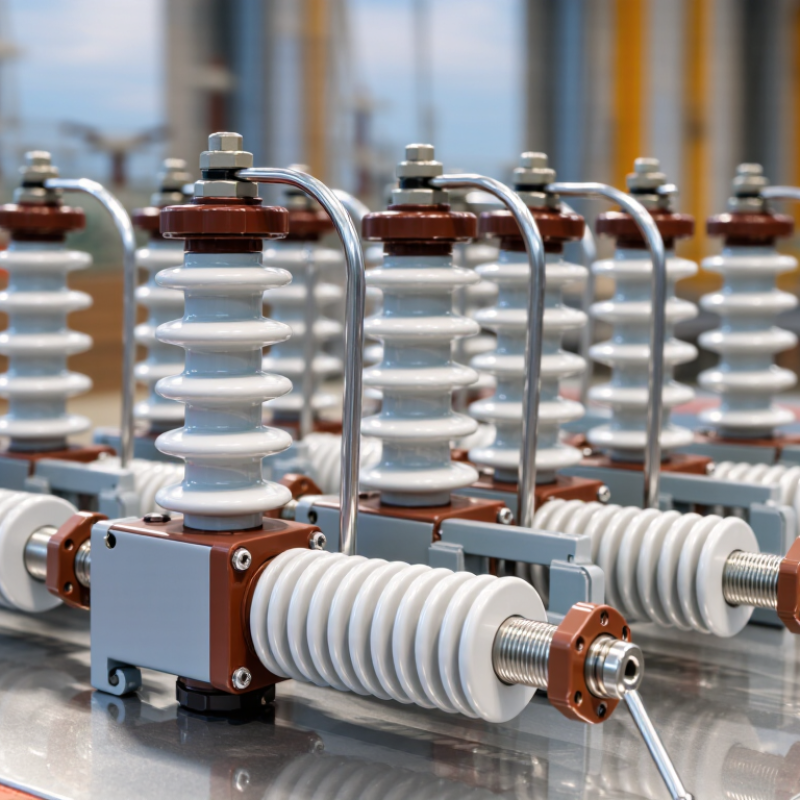
A fuse cutout is an outdoor protective device used on medium-voltage distribution lines. It combines a fuse link with a hinged carrier and an insulator. The carrier holds the fuse link in the circuit. It also provides a visible disconnection point after a fault. Many installations use porcelain or polymer insulation, depending on pollution, ultraviolet exposure, and climate.

When a fault causes excessive current, the fuse element heats and melts. The fuse tube then helps control the electrical arc. Gas produced inside the tube supports arc extinction. After the fuse opens, the carrier drops downward by gravity or spring action. This position gives line crews a clear visual signal. The device does not automatically restore power. A technician must investigate the fault and replace the fuse link before re-energizing the circuit.

For global buyers, voltage rating, continuous current, interrupting capacity, insulation level, and fuse-link coordination require careful checking. A practical inspection should also examine terminal alignment, contact pressure, sealing, and hardware corrosion. Salt air can weaken exposed metal parts. Dust and moisture may reduce insulation performance. A higher rating is not always safer; poor coordination can delay operation and damage downstream equipment. This is where specifications sometimes look complete, yet still need local engineering review.
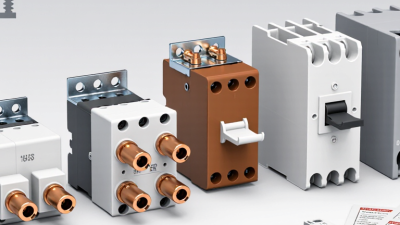
Key Types and Technical Features of Fuse Cut Outs

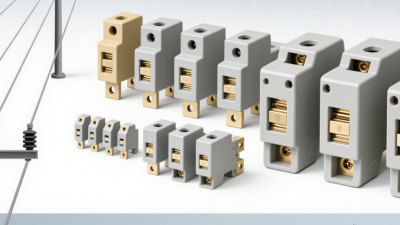
For global buyers, fuse cut outs should be selected by network conditions, not appearance alone. Common types include dropout, expulsion, current-limiting, and enclosed fuse cut outs. Dropout designs visibly open after a fault, helping maintenance crews identify the interrupted phase. Expulsion types use gas-producing elements to clear moderate fault currents. Current-limiting models reduce peak fault energy and protect transformers, cables, and switchgear. Enclosed designs offer better protection in compact or contamination-prone installations.

Technical evaluation starts with rated voltage, continuous current, and interrupting capacity. The fuse must match the system’s maximum prospective fault current. Insulation performance also matters. Check basic insulation level, creepage distance, clearance, and resistance to moisture, salt, dust, and ultraviolet exposure. In practical inspections, loose contacts and weak spring pressure often create more trouble than the fuse element itself. They deserve attention.

Mechanical strength is equally important. The carrier should operate smoothly and remain secure during vibration, wind, and short-circuit forces. Consider live-line operation, visual indication, mounting orientation, and compatibility with standard fuse links. Temperature rise testing can reveal poor contact design. Altitude may also affect insulation performance. A perfect specification rarely exists. Field conditions disagree. Buyers should review test reports, production traceability, routine inspection records, and sample performance before approving large orders. Independent verification remains sensible, especially when coordination data appears incomplete.

How to Evaluate Fuse Cut Out Manufacturers in 2026

Evaluating fuse cut out manufacturers in 2026 requires more than comparing catalog prices. The IEA Electricity 2025 report expects global electricity demand to grow by nearly 4% annually through 2027. This pressure increases the need for dependable distribution protection and faster replacement support.

Start with verifiable engineering evidence. Ask for type-test reports covering IEC 60282-2 or relevant IEEE C37.41 and C37.42 requirements. Check rated voltage, continuous current, interrupting capacity, basic insulation level, and temperature-rise results. A reliable manufacturer should provide serial-level traceability for porcelain, polymer housings, fuse links, and contact assemblies. Laboratory certificates matter.

Field details reveal more. Review installations in coastal, tropical, polluted, and high-altitude environments. Inspect creepage distance, corrosion protection, hinge strength, and ease of fuse-link replacement with insulated tools. The Ember Global Electricity Review 2025 reported that clean sources supplied over 40% of global electricity in 2024, suggesting continued grid expansion and changing load patterns. Manufacturers should explain how their products perform during fluctuating demand and frequent switching.

Ask about quality audits, sample inspection, failure analysis, and spare-part lead times. Do not accept “maintenance-free” without service records. A polished brochure is not proof. I would request customer references, but references can be selective. Factory acceptance testing, documented corrective actions, and realistic delivery commitments offer stronger evidence. Cost still matters, though the cheapest quotation may hide weak testing, inconsistent materials, or limited technical support.

Leading Fuse Cut Out Manufacturers for Global Buyers

2026 Best Fuse Cut Out Manufacturers for Global Buyers

Leading fuse cut out manufacturers for global buyers combine tested designs, stable production, and practical export experience. They supply equipment for overhead distribution networks, transformers, and rural substations. Reliable manufacturers explain voltage ratings, current capacity, breaking performance, and insulation levels in clear technical documents. They also adapt designs for local climate conditions, including heavy rain, salt exposure, dust, and strong sunlight.

Experienced buyers inspect more than a product photograph. They request routine test reports, material details, dimensional drawings, and samples before placing larger orders. Quality manufacturers use suitable porcelain or polymer insulation, corrosion-resistant hardware, and accurately aligned fuse carriers. Factory checks should include mechanical operation, insulation performance, and contact resistance. Small details matter. A loose hinge can create serious maintenance trouble.

Global procurement also depends on communication. Responsive manufacturers confirm packaging methods, spare parts, inspection procedures, and realistic delivery schedules. Export packaging should protect fragile insulators during long sea transport and repeated handling. A low quotation may look attractive, yet unclear testing or weak after-sales support can increase the final cost. No supplier is perfect. Even established factories may need improvement in documentation, customization, or response speed. Buyers should compare evidence, not promises, and keep regional standards and installation practices in view.

Global Standards, Quality Checks, and Purchasing Considerations

For global buyers, fuse cutouts should match both electrical duty and local standards. Common references include IEC 60282-2 and IEEE or ANSI requirements. Confirm the applicable edition before requesting quotations. Standards are not interchangeable by appearance.

A reliable quality check starts with the nameplate. Verify rated voltage, continuous current, interrupting capacity, impulse withstand, and frequency. Inspect porcelain or polymer insulators for cracks, voids, and uneven surfaces. Check contact pressure, hinge movement, fuse-holder alignment, and hot-dip coating thickness. Request type-test reports, routine-test records, material certificates, and serial-number traceability. Laboratory evidence matters.

Ask how the manufacturer controls incoming materials and final assembly. Sample tests should include power-frequency withstand, contact resistance, mechanical operation, and fault-interruption performance.

Packaging also deserves attention. Moisture barriers and reinforced crates can prevent damage during long sea transport. A purchase specification should state altitude, pollution level, ambient temperature, wind exposure, mounting position, and spare-fuse requirements. Small omissions become expensive later.

A certificate alone is not proof. Compare its model, rating, test date, and issuing laboratory. Factory audits can reveal weak calibration systems or inconsistent inspection records. I have seen drawings approved too quickly, with terminal dimensions later causing installation delays. That risk is easy to underestimate. Request dimensional drawings and a pre-shipment inspection. Even experienced buyers can miss regional utility preferences, so local engineering review remains valuable.