Choosing the right Fuse Cut Out supplier can influence grid safety, maintenance costs, and customer confidence. For global buyers, China offers extensive manufacturing capacity, competitive pricing, and flexible production. However, price alone is not enough. A reliable supplier must understand voltage ratings, fault-current levels, insulation performance, and local installation conditions.
Dr. John D. McDonald, a recognized power-system protection specialist, emphasizes a practical principle: “Protection equipment must perform correctly when the system is under stress.” This principle applies directly to every Fuse Cut Out used on overhead distribution lines. Buyers should examine contact quality, fuse-link compatibility, housing materials, corrosion resistance, and dropout reliability. Factory inspection records matter, too.
A strong Chinese supplier should provide clear drawings, test reports, traceable materials, and responsive technical support. Products may use porcelain or polymer insulation, depending on climate, pollution, and mechanical requirements. Coastal installations need stronger corrosion protection. High-altitude projects may require different insulation considerations. Small details can prevent large failures.
Still, sourcing is not always straightforward. Some product descriptions look impressive but lack measurable data. Some suppliers also overstate their testing capabilities. Careful buyers should request samples, review certifications, and compare actual test standards. A supplier may offer excellent pricing yet weak after-sales support. That risk deserves attention.
This guide explores how global buyers can evaluate China’s best Fuse Cut Out suppliers. It focuses on product quality, factory experience, customization, compliance, and long-term service. The goal is practical selection, not empty promotion.
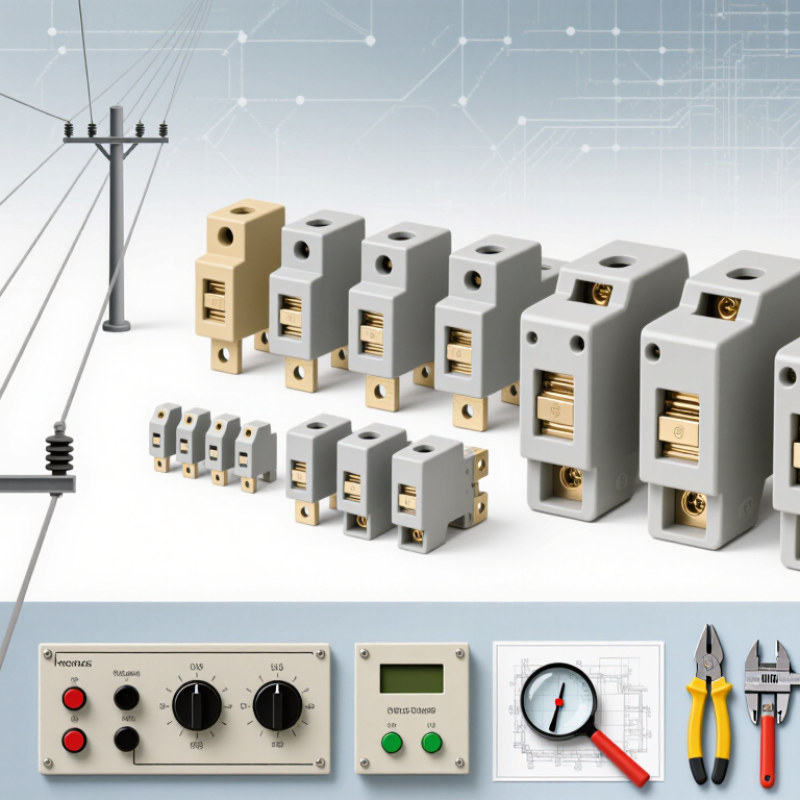
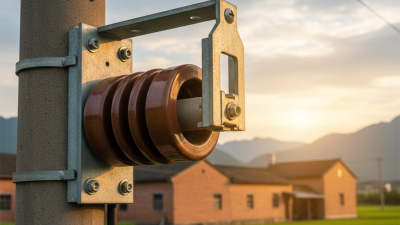
Fuse cutouts protect overhead distribution lines from damaging overcurrents. Their design is simple, but not crude. A typical unit includes an insulator, upper and lower contacts, a hinged fuse tube, and a replaceable fusible link. The tube often uses fiberglass or another arc-resistant material. When fault current heats the link beyond its time-current limit, the link melts and separates the circuit. The tube then drops visibly.
That movement matters. It gives field crews a clear isolation point. Inside the tube, gases produced during interruption help cool and extinguish the arc. IEC 60282-2 covers expulsion-type high-voltage fuses, including performance and testing requirements. The correct fuse link must coordinate with transformer inrush, feeder protection, and expected fault current. A mismatched rating can cause nuisance operation or delayed clearing.
Demand is becoming less predictable. The IEA Electricity 2024 report projected global electricity demand growth of about 4% in 2025 and 2026. More connected loads increase the value of dependable feeder protection. Yet a fuse cutout is not automatically a load-break switch. It must be rated for that duty. Engineers should also check altitude, pollution, wind, insulation level, and installation torque. Small details matter. In practice, inspection records are sometimes incomplete, and that weakness deserves attention. Global buyers should request verified test data, traceable materials, and clear time-current curves before selecting a supplier.
China Best Fuse Cut Out Supplier for Global Buyers
Key Standards for Evaluating Chinese Fuse Cutout Suppliers
Choosing a Chinese fuse cutout supplier requires more than comparing prices. Check compliance with relevant standards, such as IEC 60282-2, ANSI C37.41, or local utility requirements. Ask for complete type-test reports, routine inspection records, and calibration details. The documents should identify voltage ratings, current ratings, interrupting capacity, and tested environmental conditions. A reliable supplier can explain each result clearly, without hiding behind technical language.
Inspect the product structure closely. Look for weather-resistant porcelain or polymer insulation, corrosion-protected hardware, consistent fuse contact pressure, and secure hinge operation. Request material certificates and production photos from the actual factory. Traceability matters; each batch should connect to inspection records and shipment details. Experience with overseas installations is useful, but it does not replace independent testing. A polished catalog is not enough. I have seen attractive samples fail to reflect stable mass production, which deserves careful reflection. Check sample dimensions, coating thickness, terminal strength, and operating force before approving a large order. Factory audits, witnessed tests, and clear warranty procedures add practical confidence. Reliability is built through evidence, not promises.
| Evaluation Dimension | Relevant Standard or Reference | Key Technical Data to Verify | Recommended Buyer Evidence | Suggested Weight |
|---|---|---|---|---|
| Product Standard Compliance | IEC 60282-2; IEEE C37.41; IEEE C37.42; applicable national requirements | Rated voltage, rated current, interrupting capability, insulation level, and mechanical compatibility | Current technical datasheet, standard declaration, and independent test report covering the offered configuration | 20% |
| Rated Voltage Range | IEC 60282-2 and local grid specifications | Common medium-voltage configurations include 11 kV, 12 kV, 15 kV, 24 kV, and 36 kV; the exact system voltage must be confirmed | Nameplate drawing, insulation coordination data, and confirmation of phase-to-phase and phase-to-earth clearances | 10% |
| Continuous Current Rating | IEC 60282-2; IEEE C37.42 | Typical fuse-link ratings may range from approximately 1 A to 200 A, depending on design, voltage class, and application | Verified current-rating table, temperature-rise data, and fuse-link compatibility list | 8% |
| Interrupting Capability | IEC 60282-2; IEEE C37.41 | Common medium-voltage distribution designs are often specified at 6.3 kA, 8 kA, or 12.5 kA symmetrical interrupting current, but the required value depends on the network fault level | Type-test report identifying the exact voltage, current, power-frequency, and duty-cycle conditions | 15% |
| Insulation and Dielectric Performance | IEC 60282-2; IEC 60060-1 test principles where applicable | Power-frequency withstand, impulse withstand, creepage distance, clearance, and environmental insulation performance | Routine and type-test records, dimensional drawings, and insulation-level declaration | 10% |
| Mechanical Strength and Operating Function | IEEE C37.41; IEEE C37.42; project-specific utility requirements | Drop-out operation, hinge and contact strength, latch reliability, fuse-carrier fit, and safe manual operation | Operating-cycle records, assembly drawings, inspection checklist, and sample evaluation | 10% |
| Material and Corrosion Resistance | Applicable IEC or IEEE product requirements; ISO 9227 for salt-spray testing when specified | UV-resistant polymer or porcelain insulators, corrosion-resistant hardware, conductive contact materials, and coating durability | Material declarations, coating specifications, salt-spray results where required, and incoming-material controls | 8% |
| Quality Management System | ISO 9001:2015 | Document control, traceability, calibration, nonconforming-product control, corrective action, and final inspection | Valid certificate, certification scope, recent audit report, quality manual excerpts, and sample inspection records | 8% |
| Production and Testing Capability | IEC 60282-2; ISO/IEC 17025 for competent test laboratories | Availability of dimensional inspection, contact-resistance testing, dielectric testing, temperature-rise testing, and functional testing | Equipment list, calibration certificates, laboratory accreditation where applicable, and batch test reports | 7% |
| Customization and Interchangeability | IEEE C37.42; utility and installation specifications | Mounting dimensions, terminal arrangement, fuse-link dimensions, creepage requirements, pole spacing, and accessory compatibility | 2D/3D drawings, interface-control document, approved sample, and written change-management procedure | 5% |
| Export Documentation and Packaging | Contract terms, destination-country import rules, and recognized packaging practices | Correct HS classification, country-of-origin documentation, moisture protection, shock protection, labeling, and packing-list accuracy | Sample commercial documents, packaging specification, export references with confidential information removed, and pre-shipment checklist | 4% |
| Lead Time, Warranty, and After-Sales Support | Purchase contract and project service-level requirements | Quoted production lead time, spare-parts availability, warranty period, response time, and technical-document update process | Signed warranty terms, production schedule, escalation procedure, spare-parts list, and documented corrective-action process | 5% |
| Total Suggested Evaluation Weight | 100% | |||
Note: The ratings and technical ranges above are procurement reference points, not supplier-specific claims. Final acceptance should be based on the exact product configuration, destination-country requirements, network fault level, and verified test documentation.
China Best Fuse Cut Out Supplier for Global Buyers
Product Types, Ratings, and Customization Options for Global Buyers
China’s fuse cutout supply base supports overhead distribution projects, substations, and rural grid upgrades. MarketsandMarkets reported that the global fuse market may grow from about USD 3.5 billion in 2024 to USD 4.9 billion by 2029. This growth increases demand for reliable, application-specific protection.
Common product types include dropout fuse cutouts, expulsion fuse cutouts, current-limiting assemblies, and polymer or porcelain insulators. Buyers should compare rated voltage, continuous current, interrupting capacity, power frequency, and creepage distance. A 15 kV, 100 A cutout cannot replace a 27 kV, 200 A model without engineering review. Small differences matter.
IEC 60282-2 and IEEE C37.41 provide important testing and performance references. Serious suppliers should provide routine test records, material declarations, dimensional drawings, and traceable batch information. Customization may include 11–36 kV ratings, galvanized hardware, corrosion-resistant contacts, bird guards, fuse-link compatibility, mounting brackets, and export packaging. Installation altitude and climate also affect selection. A rating table is never enough.
Global buyers often request local standards, bilingual documents, private labeling, and third-party inspection. These options improve purchasing control, but they can extend lead times. That trade-off is easy to underestimate. Supplier evaluation should include sample testing, factory process checks, and clear warranty terms. Product appearance helps, but verified electrical performance carries greater weight.
A reliable fuse cut out starts with controlled materials and repeatable assembly. Manufacturers should inspect porcelain or polymer housings for cracks, voids, and uneven surfaces. Contact blades need stable pressure and clean plating. Small defects can create heat during service.
Each production batch should receive documented electrical and mechanical tests. These may include power-frequency withstand, contact resistance, temperature-rise, and load-breaking tests. Factory technicians should record equipment calibration dates and test conditions. Traceable serial numbers make investigations faster. In practice, paperwork is sometimes weaker than the hardware. That gap deserves attention.
Ask for recent test reports, inspection records, and sample approval details. Confirm the rated voltage, current, breaking capacity, and environmental limits. Check whether testing follows applicable IEC requirements and the destination market’s rules. Request photographs of markings and terminal construction. Samples should match the approved production design. They often do not, unless controls are strict.
Suppliers should explain material control, incoming inspection, process checks, and final release procedures. Buyers can also review factory experience with outdoor pollution, moisture, ultraviolet exposure, and installation temperatures. An honest supplier will identify limits instead of promising universal performance. That answer may feel less impressive, but it is usually more useful.
China Best Fuse Cut Out Supplier for Global Buyers
How to Select, Verify, and Purchase from a Chinese Supplier
Selecting a Chinese fuse cut out supplier requires more than a low quotation. Start with the electrical duty, not the catalog image. Specify rated voltage, continuous current, fault level, insulation level, creepage distance, and climate conditions. Ask for drawings, material details, operating temperature, and compatible fuse links. A clear specification reduces later disputes.
Verification should combine documents with physical evidence. Request recent type-test reports, routine-test records, quality certificates, and a traceable product sample. Check the issuing laboratory, report scope, model number, and test date. Do not trust a certificate screenshot alone. Arrange a video factory audit or an independent inspection before shipment. Review incoming inspection procedures, porcelain or polymer quality, contact alignment, hardware plating, and packing for sea transport. Small details matter.
A dependable purchase order should define tolerances, markings, spare parts, inspection rights, delivery terms, and acceptance criteria. Use staged payments linked to approved samples and inspection results. Confirm export packaging and serial-number traceability. A common mistake is assuming one successful sample proves stable production. It does not. Recheck critical dimensions from the production batch. Leave room for correction; even a careful checklist can miss field conditions, especially salt spray, ice, or difficult installation access. Request installation guidance and response times in writing. Keep every revision controlled.
Recommended evaluation weighting for global buyers: verify IEC compliance and test records first, then assess product quality, factory capability, export experience, delivery reliability, and after-sales support. Buyers can use this scorecard to compare suppliers consistently before purchasing.
The percentages represent a practical procurement evaluation framework and are not company or brand performance data.