2026 How to Choose the Right General Purpose Fuses for Your Needs?
Selecting the right General Purpose Fuses is crucial for electrical safety and performance. These fuses protect circuits by breaking the flow of current in overload situations. With numerous options available, it's easy to feel overwhelmed. Understanding your specific needs can guide your choice effectively.
General Purpose Fuses come in various ratings, sizes, and types. A fitting fuse can prevent significant damage to your electrical devices and systems. However, making the wrong choice may lead to failure or increased risk.
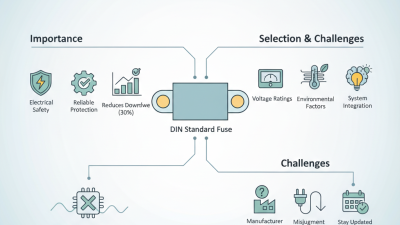
Consider factors such as voltage ratings, current limits, and environmental conditions. A reliable fuse will ensure the longevity of your equipment. Many users overlook these details, resulting in costly mistakes. Reflecting on your requirements will lead to smarter decisions in fuse selection.
Understanding General Purpose Fuses and Their Applications
General purpose fuses play a vital role in electrical safety. They are designed to protect circuits from overload and short circuits. These fuses come in various ratings, making them adaptable for different applications. Understanding the specifications is key to making informed choices. For instance, the voltage rating should match the circuit needs. Using a fuse with the incorrect voltage can lead to failure.
Applications for general purpose fuses vary widely. They are common in household appliances and industrial equipment. For example, a fuse in an HVAC system ensures safe operation. Moreover, selecting the right fuse can be challenging. It requires knowledge of both the current flow and potential hazards. Some users might overlook these factors, leading to potential electrical failures.
When selecting fuses, consider the installation environment. Heat and moisture can impact performance. A fuse might blow too easily in a high-temperature area. It's crucial to account for these conditions. Observing fuse performance under different circumstances may yield insights. A thoughtful approach will lead to better safety and efficiency in your electrical systems.
2026 How to Choose the Right General Purpose Fuses for Your Needs?
| Fuse Type |
Current Rating (A) |
Voltage Rating (V) |
Applications |
Physical Size |
| Glass Tube Fuse |
1 - 30 |
250 |
Electrical Appliances, Lighting |
5 x 20 mm |
| Blade Fuse |
2 - 30 |
32 |
Automotive, Marine |
28 x 10 mm |
| Ceramic Fuse |
10 - 100 |
500 |
Industrial Machinery, HVAC |
14 x 51 mm |
| Slow-Blow Fuse |
5 - 15 |
250 |
Motors, Transformers |
6 x 30 mm |
| Resettable Fuse |
0.5 - 10 |
60 |
Consumer Electronics |
SMD Type |
Key Factors to Consider When Choosing General Purpose Fuses
When selecting general purpose fuses, it’s crucial to consider several key factors. Understanding the application for which the fuse will be used is fundamental. Each fuse type caters to specific environments and requirements. For example, residential use may differ from industrial applications due to varying voltage levels and current ratings.
Tips: Always check the voltage rating. A fuse with a lower voltage may not perform reliably.
Another important aspect is the current rating. This determines how much electrical load the fuse can handle before blowing. Choosing a fuse with an appropriate rating ensures safety and efficiency. If the rating is too high, it may allow faults to occur before the fuse reacts.
Tips: Consult technical specifications. They provide details on temperature ratings and interrupting capacities.
Finally, consider environmental factors. Fuses exposed to moisture, dust, or extreme temperatures require specific designs. These conditions can influence a fuse’s performance and lifespan. Neglecting environmental factors can lead to premature failures.
Consider conducting a review of similar applications. This helps in recognizing optimal choices based on prior experiences.
Types of General Purpose Fuses and Their Characteristics
General purpose fuses are essential for protecting electrical circuits. They come in several types, each with unique characteristics. Understanding these differences is vital for selecting the right fuse. One common type is the fast-acting fuse. It responds quickly to overloads and short circuits. This feature prevents equipment damage, making them ideal for sensitive electronics.
Another type is the time-delay fuse. It allows temporary surges without blowing. This makes them suitable for motors and compressors where inrush currents are high. However, they can be less reliable in constant overload situations. Users should be aware of their limitations.
Lastly, the dual-element fuse combines both fast and time-delay features. This versatility is appealing but can be more expensive. Each type has its strengths and drawbacks. Choosing the right fuse requires a good grasp of your specific needs. Consider the application carefully, as it impacts performance and safety.
How to Determine the Appropriate Ratings for Fuse Selection
Selecting the right general-purpose fuses is crucial for
safety and reliability. The first step is determining the appropriate ratings for your specific application.
Fuses are rated by current and voltage. Using a fuse with the wrong ratings can lead to operational failures or fires.
Consider the maximum current that your circuit will carry. Look for the fuse's amp rating.
It should exceed the maximum load but be less than the equipment’s threshold. This balance is tricky.
A fuse rated too high will not protect your equipment. One rated too low may blow unnecessarily.
Voltage ratings are equally important. Ensure the fuse can handle the circuit's voltage. If your application
operates at higher voltages, select fuses that exceed this requirement to maintain reliability. Remember that
failure to do so can lead to catastrophic damage.
Rethink your choices carefully. An accurate selection is vital for long-term performance and safety.
Common Mistakes to Avoid When Choosing General Purpose Fuses
Choosing the right general-purpose fuses can be tricky. Many overlook the amperage rating. Selecting a fuse with an incorrect amp rating can lead to equipment damage. It might blow too often or fail to protect the circuit properly. Always calculate your circuit needs before making a choice.
Another common mistake is ignoring voltage ratings. Using a fuse with a lower voltage rating than required can result in hazardous situations. If your application increases in power later, that fuse might not handle the excess. Ensure that the fuse can accommodate your system's demands.
Lastly, consider the environment. Many forget to evaluate factors like temperature and humidity. Some fuses do not perform well in extreme conditions. Researching the environmental impact on fuse performance can save time and money. Review your options carefully and avoid rushing the decision.