How to Choose China Best Knife Blade Fuse Supplier?
Choosing the best China Knife Blade Fuse supplier requires more than comparing unit prices. It requires evidence, testing discipline, and clear communication. A reliable supplier should understand automotive current protection, not merely sell molded plastic parts. Their products should match required amperage, voltage rating, interrupting capacity, terminal design, and operating temperature.
The International Energy Agency reported nearly 14 million electric cars were sold worldwide in 2023. Electric vehicles increase demand for dependable circuit protection across low-voltage systems and auxiliary equipment. Recent automotive fuse market reports from Fortune Business Insights and MarketsandMarkets also indicate continued market growth, supported by vehicle electrification and expanding automotive production. These trends make supplier selection more important. Small quality failures can create costly field problems.
Look closely.
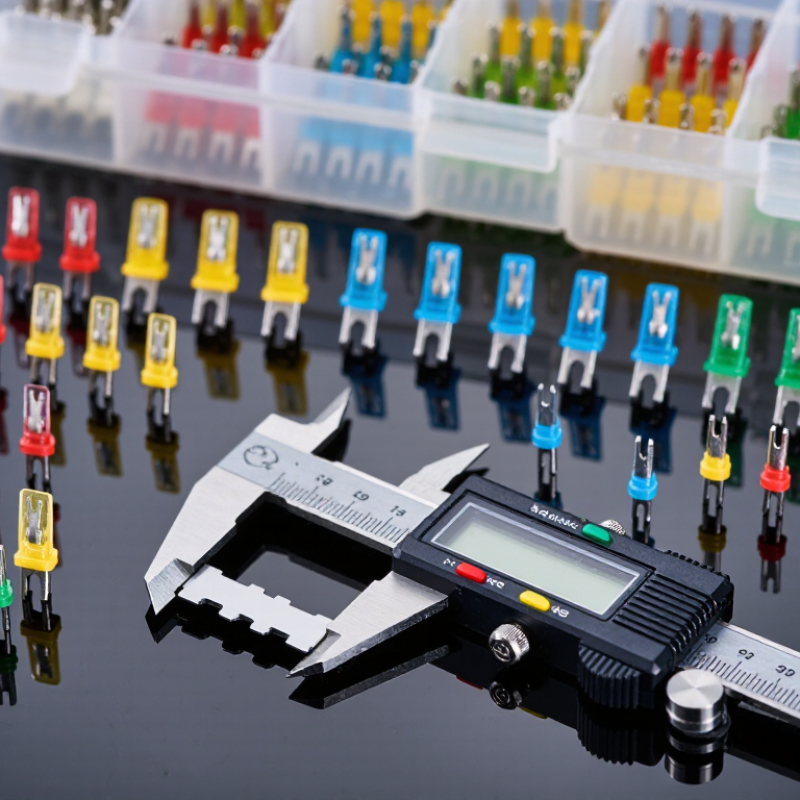
Ask for ISO 9001 evidence, IATF 16949 capability, material declarations, and batch traceability. Confirm whether testing follows relevant IEC, ISO, or automotive customer requirements. Request samples before discussing large orders. Measure blade dimensions with calipers, inspect terminal plating, and check voltage drop under realistic current loads. A serious manufacturer should provide inspection records, production photographs, and a clear corrective-action process.
Pricing still matters, but it should not lead the decision. A low quotation may hide unstable raw materials, weak crimping, or inconsistent fuse elements. I have seen supplier evaluations fail because buyers trusted polished samples alone. That is an uncomfortable lesson. A practical scorecard should compare quality controls, delivery history, customization ability, communication speed, and total landed cost. The strongest China Knife Blade Fuse supplier is not always the largest factory. It is the partner that can repeatedly prove performance, traceability, and accountability.
Define Your Knife Blade Fuse Requirements and Standards
Before comparing China’s best knife blade fuse suppliers, define the fuse’s working environment. Record rated voltage, continuous current, interrupting rating, and allowable temperature range. Check whether the circuit uses direct current or alternating current. DC interruption can be more demanding. Measure available space, terminal width, blade size, and mounting method. A fuse may fit electrically but fail mechanically. Small details matter.
Specify the load profile, including inrush current, overload duration, and expected fault current. Motors, heaters, battery circuits, and control modules need different time-current characteristics. Select a fast-acting or time-delay design after reviewing real measurements. Do not rely on a catalogue label alone. Ask suppliers for datasheets, time-current curves, resistance values, and interrupting-test evidence. Test samples during cold starts and repeated cycling. One clean bench test is not enough.
Write applicable standards into the purchasing document, rather than requesting “international quality.” Confirm the certification route for your target market and the relevant automotive, industrial, or general-purpose fuse standard. Check marking, traceability, lot control, and change-notification procedures. Request inspection records for dimensions, alloy composition, operating characteristics, and terminal plating. Audit consistency through sample lots. Leave acceptance limits in clear numbers. Promised stability means little when limits remain undefined. Recheck assumptions when enclosure temperature changes. A specification can look complete on paper and still be incomplete in the vehicle.
Compare Supplier Expertise, Product Quality, and Manufacturing Capacity
How to Choose China Best Knife Blade Fuse Supplier?
Compare Supplier Expertise, Product Quality, and Manufacturing Capacity
Choosing a Chinese knife blade fuse supplier requires more than comparing online prices. Real expertise appears in application support, drawings, and failure analysis. Ask whether engineers understand rated current, breaking capacity, temperature rise, and selectivity. A supplier should explain how its fuse performs inside transformers, switchgear, or industrial distribution panels. I have learned that quick answers are not always good answers. Request test reports linked to exact models, materials, and production lots.
Product quality needs measurable evidence. The 2024 Mordor Intelligence Fuse Market report identifies steady global demand, driven by industrial electrification and infrastructure upgrades. That growth makes traceability more important, not less. Check compliance with applicable IEC 60269 requirements, including time-current characteristics and interrupting performance. Review copper or alloy composition, plating thickness, contact resistance, and thermal-cycle results. Ask for samples from normal production, not specially prepared pieces. A clean sample can hide inconsistent stamping or weak welds.
Manufacturing capacity also deserves proof. Compare monthly output, equipment automation, mold ownership, inspection stations, and backup suppliers for critical materials. Request capacity records during peak seasons. Confirm whether the factory can maintain tolerances across large batches. The 2023 Grand View Research analysis reported continued expansion in the global electrical equipment market, increasing pressure on reliable component supply. Still, bigger capacity does not guarantee better control. Audit defect rates, corrective-action records, packaging protection, and delivery history. Leave room for doubt. An impressive certificate cannot replace independent verification and a small pilot order.
Verify Certifications, Testing Procedures, and Quality Control Systems
When choosing a China knife blade fuse supplier, verify certificates before comparing prices.
A certificate is only a starting point. Ask for the issuing body, scope, expiry date, and factory address. ISO Survey 2023 recorded more than 1.2 million ISO 9001 certificates worldwide, yet certification alone cannot prove fuse performance. The certificate must cover the actual production site and product category.
Request test records aligned with IEC 60269 or the applicable regional standard. Check rated current, voltage, breaking capacity, temperature rise, time-current curves, and endurance results. Reliable suppliers should provide calibrated equipment records and sample identification. During audits, I also compare raw-material certificates with production batches. Copper alloy variation can affect resistance and heating. Small details matter.
Inspect the quality control system on the factory floor. Look for incoming inspection, automated welding checks, dimensional controls, and final electrical testing. Ask how failed units are isolated and traced. A useful supplier can show a batch number on the package, inspection report, and production record. I have seen impressive reports with weak traceability. That is a warning. Independent sample testing is wise, especially before annual orders. For automotive applications, verify whether the supplier’s quality system matches relevant customer and industry requirements, such as IATF 16949. No document replaces physical evidence.
Evaluate Pricing, Minimum Orders, Lead Times, and Customer Support
Choosing China’s best knife blade fuse supplier requires more than comparing unit prices. A low quote may exclude tooling, packaging, inspection, or shipping. Request a complete cost sheet with currency, payment terms, sample fees, and replacement conditions. Compare the landed cost, not only the factory price. A clear quote is valuable.
Minimum order quantity can affect cash flow and inventory risk. Ask whether the supplier accepts a pilot order before full production. During a trial order, check fuse dimensions, blade finish, labeling, and packaging strength. Small details matter. However, a lower MOQ may increase the unit price, so calculate both options carefully. I have seen buyers choose the cheapest offer and later pay more for slow-moving stock.
Lead time should include material preparation, production, inspection, and dispatch. Ask for a written schedule with realistic buffer days. Confirm how delays are reported and corrected. Customer support is equally important after payment. Test response speed before ordering by sending technical questions. Reliable suppliers provide drawings, test records, packing photos, and clear answers from one responsible contact. Still, no supplier performs perfectly every time. A missed detail can happen. What matters is whether the team acknowledges it, explains the cause, and offers a measurable solution. Evaluate communication throughout sampling, production, and after-sales handling.
How to Choose China's Best Knife Blade Fuse Supplier
A practical supplier-screening model for knife blade fuse sourcing. The chart uses procurement priorities commonly applied to industrial electrical components: total cost, minimum order flexibility, lead-time reliability, and customer support responsiveness.
Recommended screening weights: lead-time reliability 30%, pricing and total cost 25%, customer support responsiveness 25%, and minimum-order flexibility 20%. Verify quotations, MOQ terms, production schedules, test reports, and after-sales response times before making a final supplier decision.