Leave Your Message

7 Tips for Buying Cooper Power Fuses Globally?

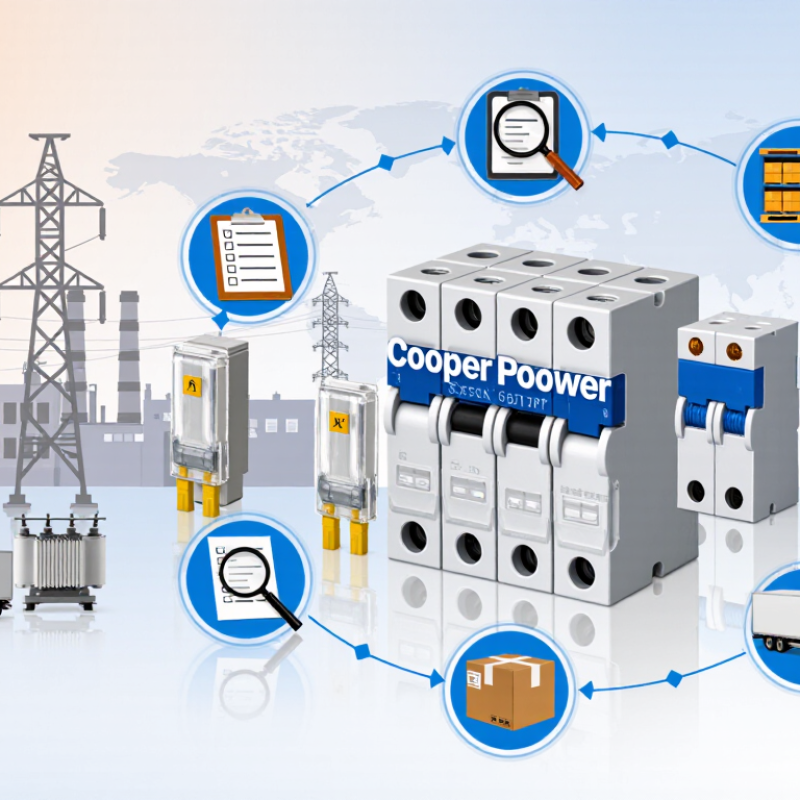
Buying Cooper Power Fuses across borders requires more than comparing prices. A fuse may look identical online yet differ in voltage rating, interrupting capacity, or mounting design. This guide presents seven practical tips for selecting suitable Cooper Power Fuses from international suppliers. It focuses on specification checks, supplier verification, documentation, shipping, and after-sales support.

Details matter. Confirm the system voltage, continuous current, frequency, fault level, and installation environment before requesting a quotation. A rural feeder, industrial substation, and pad-mounted transformer may require very different protection characteristics. Check the exact catalog number, fuse type, striker option, and accessory compatibility. Product labels should match the manufacturer’s technical documents. Clear photos help, but they are not enough. Ask for datasheets, certificates, batch information, and traceable packing details.

Supplier reliability deserves equal attention. Review technical responses, warranty terms, lead times, and replacement procedures. Do not rely only on marketplace ratings. A low price can hide obsolete stock, unclear origin, or unsuitable packaging. Think carefully here. Even experienced buyers can overlook regional distribution differences or changing product references. Verify current information with authorized channels when possible. The guide also considers safe transport, customs paperwork, storage conditions, and incoming inspection. These steps can reduce costly delays and prevent the wrong fuse from reaching energized equipment. No checklist is perfect, but disciplined verification makes global purchasing far more dependable.
7 Tips for Buying Cooper Power Fuses Globally?

Understanding Cooper Power Fuse Types and Applications

Power fuse selection begins with understanding the application, not the catalog picture. Current-limiting fuses reduce fault energy quickly and suit transformers, motor circuits, and capacitor banks. Expulsion fuses interrupt faults through gas-producing materials and often serve outdoor distribution equipment. Backup fuses protect against high fault currents but may need another device for lower overloads. The wrong type can interrupt poorly or damage connected equipment.

Check the system voltage, continuous current, interrupting rating, and available fault current. For transformer protection, compare inrush current with the fuse’s time-current curve. A fuse that tolerates normal energizing may still clear dangerous faults quickly. Medium-voltage feeders may require coordination with reclosers, switches, and downstream fuses. Installation conditions matter too. Heat, altitude, moisture, and enclosure design can change performance. Small details matter.

When buying internationally, confirm dimensions, striker arrangements, mounting style, and applicable test standards. A fuse can match electrically yet fail mechanically. I have seen purchasing teams overlook this point. It caused avoidable installation delays. Ask for traceable test reports, production dates, and clear performance curves. Verify whether the fuse is intended for indoor or outdoor service. Local engineers should review the selection, especially where protection studies are incomplete. I still recheck every rating against the actual network, because assumptions rarely survive field conditions.


Checking Voltage, Current, and Interrupting Ratings

Global fuse purchasing starts with three numbers: voltage, current, and interrupting rating. Verify the system’s maximum line-to-line voltage, not only its normal operating voltage. A 12 kV circuit can experience higher transient stress during switching. IEC 60282-1 requires medium-voltage fuses to meet defined performance tests, but local installation conditions still matter.

Tip one match the voltage class. Tip two confirm frequency and earthing arrangement.

For current, use the continuous load, expected overload, ambient temperature, and transformer inrush. A fuse rated too close to normal load may operate during harmless peaks. One rated too high may protect equipment poorly.

Tip three compare the fuse’s rated current with measured load data.
Tip four check derating tables at the actual enclosure temperature.
Tip five review the time-current curve, not just the printed ampere value.

The curve often reveals hidden coordination problems. IEA’s Electricity 2024 report projects global electricity demand growth of about 4% in 2025, increasing pressure on aging distribution equipment. More load does not automatically justify a larger fuse.

The interrupting rating must exceed the prospective short-circuit current at the installation point.

Tip six obtain the utility fault-current study, including transformer impedance.
Tip seven confirm the rating against IEC or IEEE test requirements.

U.S. Energy Information Administration reliability data show that outage performance varies significantly by region and event conditions. That makes location-specific verification essential. I have seen purchases fail because engineers checked normal current but overlooked future network changes. Recheck the calculation after transformer upgrades. Small paperwork gaps can become expensive field problems.

Verifying Standards, Certifications, and Product Authenticity

7 Tips for Buying Power Fuses Globally

Verify the standard before comparing prices. Check whether the fuse follows IEC 60269, IEEE C37.40, or the standard required by your grid operator. Match voltage, continuous current, interrupting rating, frequency, and fuse class. Do not trust a familiar part number alone. Request the complete datasheet and the latest type-test report. The report should identify the exact construction, ratings, and test laboratory. An ISO/IEC 17025-accredited laboratory adds useful credibility.

Check certification scope, not just certificate logos. Confirm the certificate holder, product family, expiry date, and applicable market. A conformity mark by itself may not prove interruption performance. Ask for batch records, manufacturing dates, serial numbers, and clear package photographs. Compare these details with the manufacturer’s official documentation. OECD and EUIPO estimated counterfeit goods represented 3.3% of global trade, worth about USD 509 billion, using 2016 customs data. Traceability is not paperwork theater.

Use an authorized or independently verified distributor. Confirm storage conditions, especially moisture exposure and long warehouse periods. IEA’s Electricity 2024 report projected global electricity demand growth of around 4% in 2024, increasing pressure on replacement inventories. That pressure can encourage rushed purchasing. Avoid it. A clean box can still hide a specification mismatch. No checklist is perfect. Have a qualified engineer review the certificate, test report, and site requirements together before approval.

7 Tips for Buying Power Fuses Globally

Verify the applicable standard, voltage class, current rating, certification evidence, traceability, technical datasheet, and supplier documentation before purchasing.

This chart shows the maximum voltage scope of the IEC 60269 low-voltage fuse series: up to 1,000 V AC and 1,500 V DC. These are standard-level limits, not a confirmation that every individual fuse is rated for the maximum value. Always match the product marking and datasheet to the application.

  1. Confirm the applicable national or international fuse standard.
  2. Match the rated voltage for both AC and DC systems where relevant.
  3. Check the rated current, breaking capacity, time-current characteristic, and utilization category.
  4. Request valid conformity documents and certification references.
  5. Compare product markings, datasheets, packaging, and serial or batch traceability.
  6. Verify that the supplier provides consistent technical and customs documentation.
  7. Inspect samples before shipment and retain records for incoming quality control.

Comparing Global Suppliers, Pricing, and Delivery Terms

Buying medium-voltage power fuses across borders requires more than a low unit price. I compare suppliers through production records, test reports, and recent customer references. A reliable seller should identify fuse class, voltage rating, interrupting capacity, dimensions, and compatible mounting hardware. Ask for lot numbers and shelf-life details. Small omissions become expensive delays.

Quoted prices can hide freight, export packaging, payment fees, and minimum order quantities. Request a line-by-line pro forma invoice in one currency. Then calculate landed cost per usable fuse, not per carton. I also compare warranty handling and replacement procedures. A supplier offering five percent less may cost more after inspection failures or emergency air freight. My first comparison missed customs brokerage charges. That mistake changed the ranking.

Delivery terms deserve equal attention. Confirm production lead time, dispatch location, carrier responsibility, insurance, and delivery point in writing. Ask whether stock is physically available. “Ready to ship” can mean several days of internal processing. For urgent projects, split orders between available stock and scheduled production. Keep a buffer. Not always easy. Before payment, verify packing photos, batch traceability, and escalation contacts. Build a supplier scorecard covering quality evidence, landed price, response speed, and on-time delivery. Review it after each shipment, because assumptions age quickly.

7 Tips for Buying Cooper Power Fuses Globally: Comparing Global Suppliers, Pricing, and Delivery Terms

The figures below are indicative purchasing benchmarks for medium-voltage power fuses and related replacement units. Actual prices, availability, taxes, freight, certification, and delivery dates should be confirmed in a written quotation for the exact voltage, current, interrupting rating, mounting style, and fuse characteristic.

Tip Buying Dimension Recommended Check Typical Market Benchmark Indicative Price Range
(USD per unit)
Typical Lead Time Delivery and Documentation Terms
1 Confirm the electrical specification Match rated voltage, continuous current, frequency, interrupting rating, fuse speed, striker arrangement, dimensions, and mounting configuration with the equipment nameplate and approved drawings. Common medium-voltage applications use ratings such as 3.6–12 kV, with current ratings selected for the transformer, feeder, motor, or capacitor application. The exact rating must be verified before ordering. Standard replacement fuse links: $40–$180
Higher-rated or specialized assemblies: $180–$650+
Stocked items: 1–3 weeks
Non-stock or engineered items: 6–14 weeks
Request a dimensional drawing, technical data sheet, and certificate of conformity. Do not substitute a fuse solely because its voltage and ampere values appear similar.
2 Compare suppliers by region Evaluate regional availability, technical support, export experience, spare-parts coverage, and the supplier’s ability to provide traceable product documentation. North America: strong technical support and local inventory, often higher unit cost.
Europe: broad standards coverage and documentation, moderate-to-high pricing.
Asia: competitive pricing and manufacturing capacity, with greater need to verify certification and lead-time reliability.
Local stock channels: typically $100–$650+
Factory-direct or volume sourcing: often 10–30% lower before freight, duties, and inspection.
Regional stock: 3–15 business days
International factory supply: 6–16 weeks
Compare like-for-like quotations using the same currency, quantity, Incoterm, destination, documentation package, and warranty period.
3 Check standards and test evidence Confirm compliance with the applicable IEC or IEEE/ANSI requirements and request routine-test or type-test evidence when required by the project or utility. Common references include IEC 60282-1 for high-voltage current-limiting fuses and IEEE C37.40/C37.46 for applicable fuse and fuse-disconnector requirements. The governing standard depends on the installation and buyer specification. Basic documentation is often included. Additional witnessed testing, special reports, or project-specific inspection may add approximately $100–$1,500 per order. Standard documentation: no material delay
Special testing or inspection: usually 1–4 additional weeks
Require the standard edition, test scope, serial or batch traceability, country of origin, and certificate format before issuing a purchase order.
4 Compare total landed cost Add product price, packaging, freight, insurance, import duty, customs brokerage, local taxes, inspection, and possible storage charges. For small international shipments, freight and handling can represent a significant share of the order value. Consolidated shipments generally reduce the per-unit logistics cost. International freight and handling may add approximately $30–$250 per shipment for small commercial consignments, excluding duties and taxes. Air freight: commonly 5–12 business days after dispatch.
Ocean freight: commonly 4–10 weeks, depending on route and customs clearance.
Ask for a landed-cost comparison under FCA, FOB, CPT, CIP, or DAP terms. Confirm who is responsible for export clearance, insurance, import clearance, and local delivery.
5 Review minimum order quantity and price breaks Compare one-off replacement purchases with annual demand, emergency spares, and planned maintenance quantities. Single-unit orders generally have the highest unit price. Volume discounts are commonly offered at 5, 10, 25, or 50 units, but the discount depends on specification and inventory status. Typical volume savings may be approximately 5–20% compared with a single-unit purchase, before freight and taxes. Stocked quantities: usually 2–4 weeks for order processing and transport.
Production quantities: commonly 8–16 weeks.
Request a price-break schedule, minimum order quantity, remaining shelf-life statement, packaging quantity, and an agreed partial-shipment policy.
6 Protect delivery reliability Obtain a confirmed production slot, dispatch date, transport mode, packing details, and escalation contact. Avoid relying only on an unconfirmed estimated lead time. A realistic procurement schedule should include quotation approval, technical clarification, production, inspection, export handling, transit, customs clearance, and site delivery. Expedited production or air shipment can increase the logistics portion of cost by approximately 20–100%, depending on urgency and shipment size. A practical planning allowance is 8–20 weeks from purchase order to site receipt for non-stock international orders. Use a purchase order with milestone dates, approved drawings, delay notification requirements, packaging standards, and a clear remedy for non-conforming or late deliveries.
7 Verify inspection, warranty, and after-sales support Check incoming inspection requirements, physical condition, seal integrity, storage limits, warranty duration, replacement procedure, and technical response time. Power fuses should be stored in clean, dry conditions and protected from mechanical damage. The buyer should verify packaging, markings, dimensions, and certificates before installation. Pre-shipment inspection may cost approximately $250–$1,200 per order, depending on scope and location. Warranty terms should be stated in the quotation. Inspection normally adds 3–10 business days; replacement timing depends on whether equivalent stock is available. Define acceptance criteria, defect reporting deadlines, return responsibility, replacement freight responsibility, and the required evidence for a warranty claim.

Planning note: Pricing and lead-time ranges are general procurement benchmarks, not firm offers. Always validate the final quotation against the exact technical specification, destination country, applicable import rules, and current freight conditions.

Planning Import, Installation, and Replacement Requirements

Planning to buy power fuses globally starts with the application, not the product photo. Confirm voltage, continuous current, interrupting capacity, frequency, and the equipment’s protection class. A fuse that fits physically may still be electrically unsuitable. Ask suppliers for current datasheets, test reports, dimensional drawings, and traceable lot information. I once focused too heavily on price and overlooked the required mounting arrangement.

Import planning needs equal attention. Check packing dimensions, moisture protection, storage temperature, and the documents required by your customs broker. Keep the fuse model, rating, quantity, and country of origin consistent across invoices and shipping records. Request sealed packaging with clear labels. Small errors can delay a project for weeks. It is also wise to order a few approved spares, but avoid excessive stock that may age unnoticed.

Before installation, compare the received fuse with the approved drawing and inspect it for cracks, corrosion, or damaged terminals. Only qualified personnel should install it under the equipment maker’s procedures and applicable electrical codes. Record torque values, installation dates, and circuit locations. For replacement planning, identify the failure cause before fitting a new fuse. Check overload history, loose connections, moisture, and coordination with upstream protection. A replacement is not always a repair. Review the result after energizing, because field conditions sometimes expose assumptions that looked reasonable on paper.